


Terra Cotta | Interstate Brick
Photo Credit: Tanners Masonry
Mortar tends to get less attention than the brick itself. Most discussions focus on colour, texture, and bond pattern, while mortar is treated as the material that simply holds the wall together.
On site, it does much more than that.
Mortar affects how sharply the joints stand out, how consistent the finished wall looks, how moisture moves through the assembly, and how the brickwork responds to seasonal expansion and contraction. Many of the issues that show up years later can be traced back to mortar decisions made before the first brick is laid.
Mortar Colour Changes How the Wall Reads
Mortar colour has a direct impact on the appearance of the finished wall.
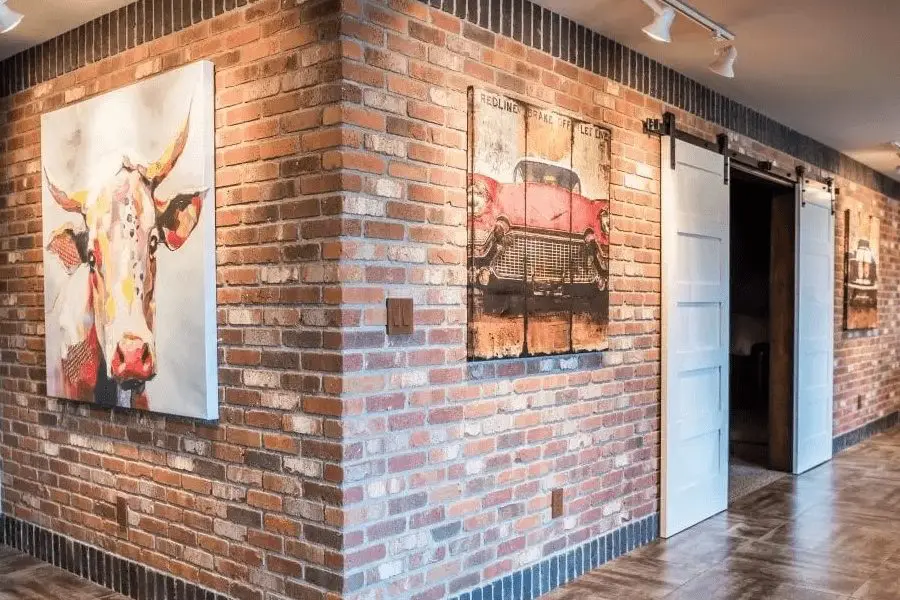
When the mortar contrasts with the brick, the joints become more prominent and the bond pattern is easier to see. This can create a more traditional look, but it also leaves less room for variation. Minor differences in joint alignment, cuts, or brick colour tend to stand out more clearly.
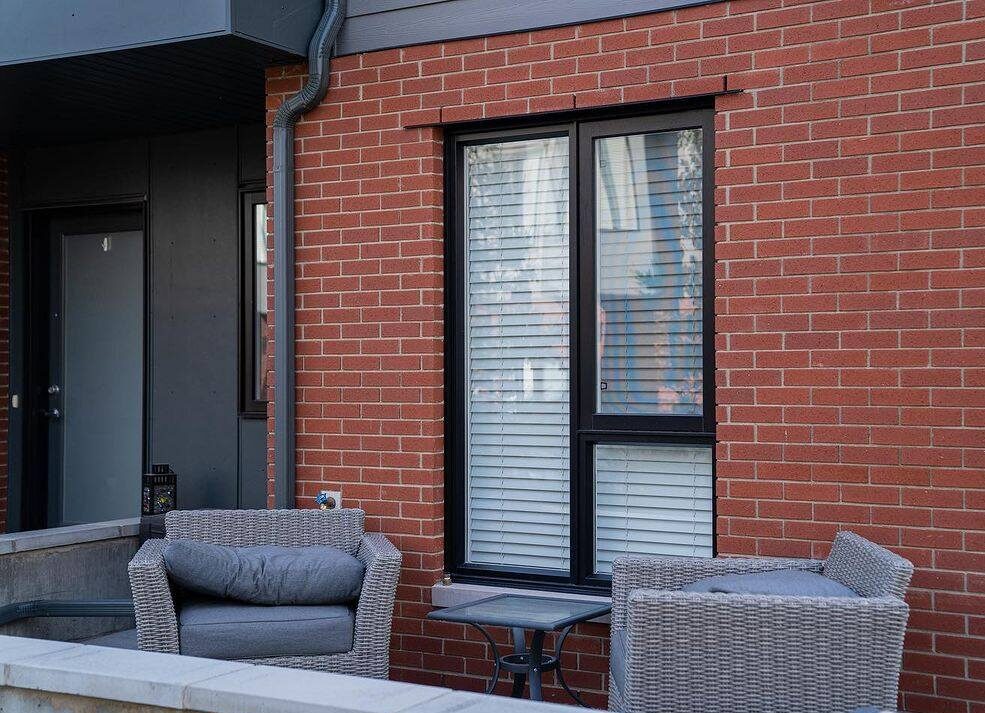
When the mortar is closer in colour to the brick, the surface reads more uniformly. The joints recede, colour variation blends more naturally, and the wall takes on a quieter appearance.
For this reason, mock-ups are important. Brick and mortar that look balanced as individual samples can read very differently once installed over a full elevation.
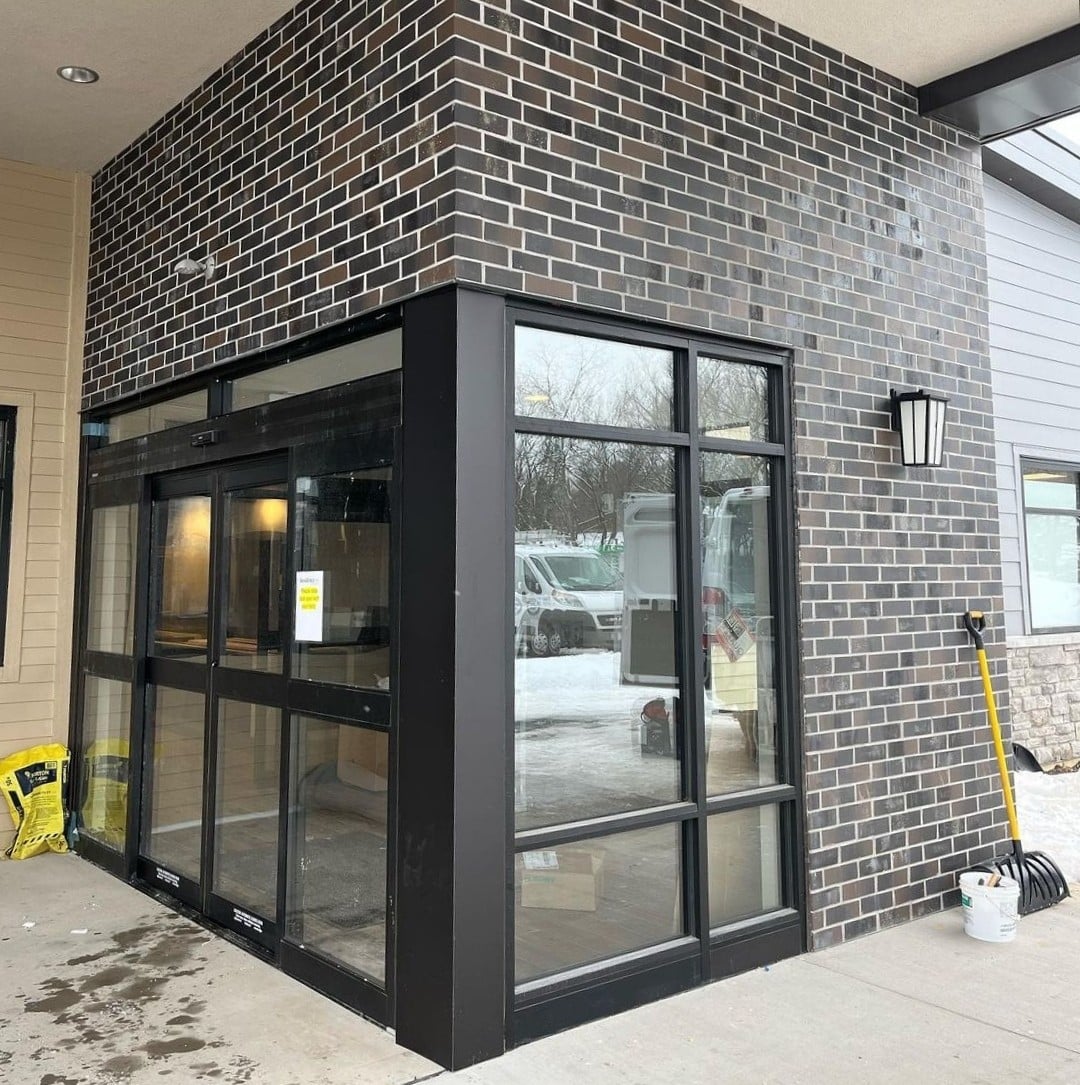
Urban Blend | King Klinker
Photo Credit: Speedy Mason
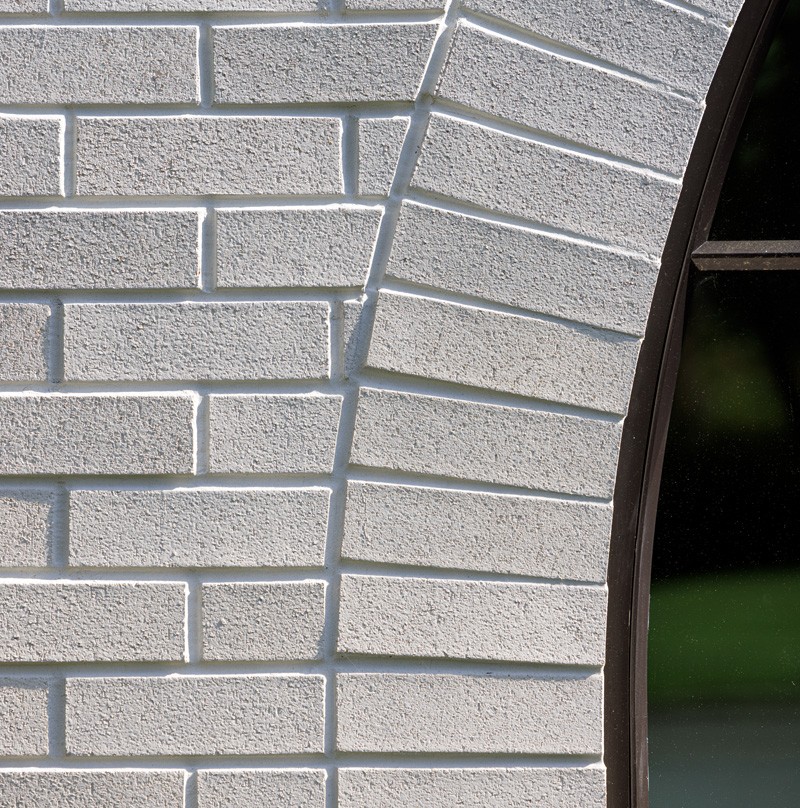
Aspen White | Glen-Gery
Joint Profiles Affect Appearance and Water Management
Colour is only one part of the equation. The way the mortar is tooled also changes both the appearance and performance of the wall.
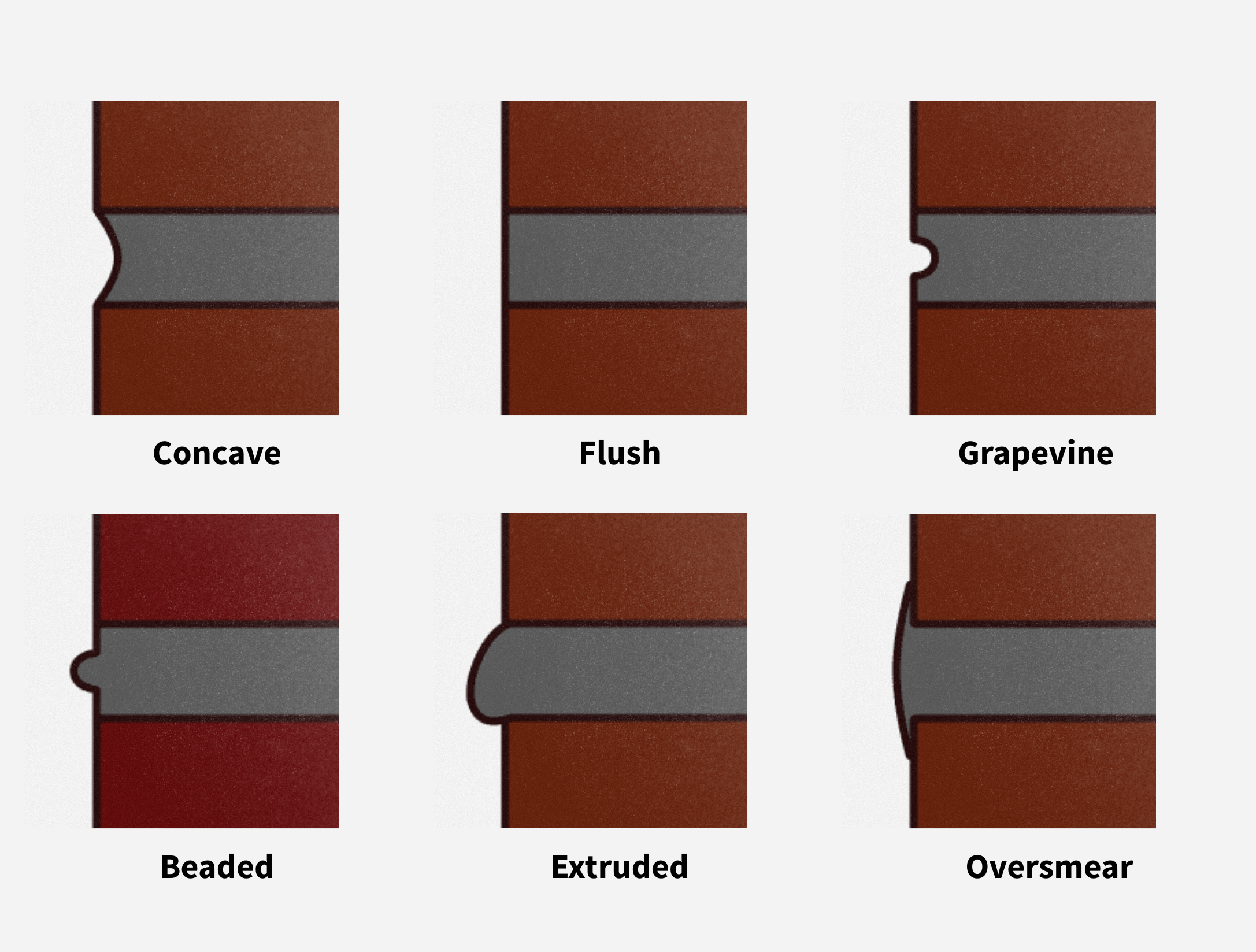
On exterior brickwork, concave joints are widely used because they compress the mortar and help shed water away from the surface. Other joint profiles are chosen primarily for their visual effect. Flush joints create a more contemporary look. Grapevine, beaded, extruded, and oversmear joints add texture and shadow and are often used where a more traditional finish is desired.
The selected profile should be considered early, along with the brick and mortar colour, since all three work together to define the finished appearance.
Consistent Mixing Keeps the Wall Uniform
Even with the right colour and joint profile, inconsistent mixing can affect the appearance of the wall.
Small changes in water content or material proportions can alter the colour and texture of the mortar. These differences may not be noticeable during installation, but they often become visible after the wall dries. On large elevations, this can show up as patchy areas that interrupt the overall consistency of the brickwork.
Maintaining the same mix throughout the project helps the wall read as one continuous surface.
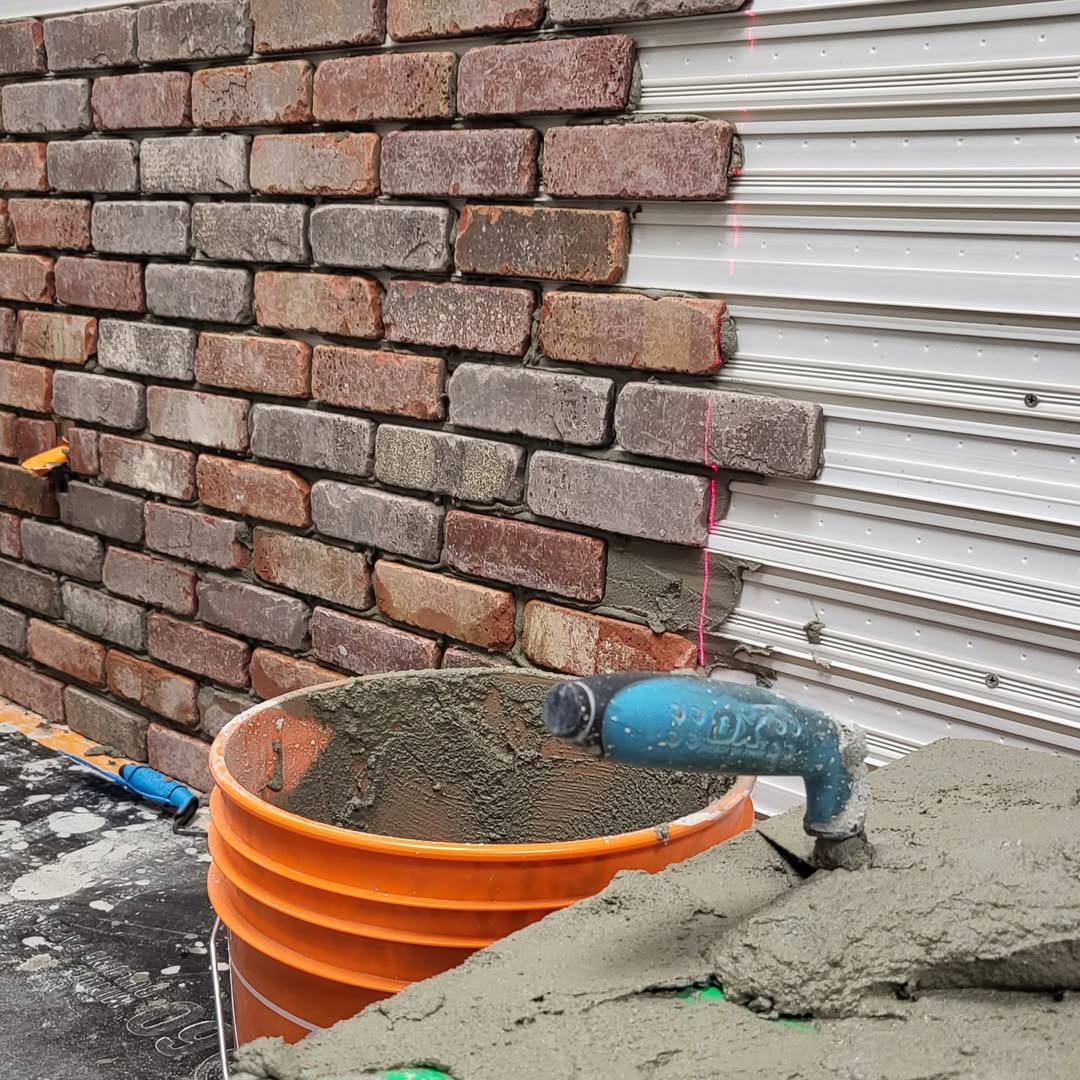
Prohibition| Hebron Brick
Mortar Helps the Wall Dry
Mortar also plays a role in how moisture moves through the wall.
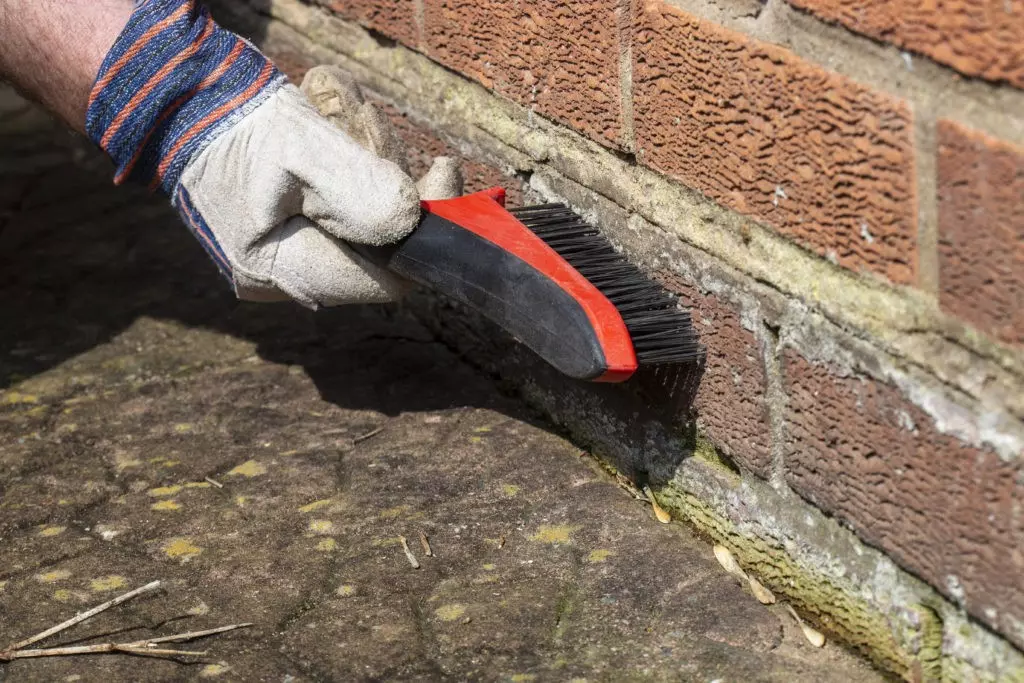
Rain, snow, and ground moisture all introduce water into masonry assemblies. Mortar must allow that moisture to escape so the wall can dry between wetting cycles.
When the mortar is too dense, moisture can remain trapped within the wall. In freeze-thaw conditions, that water expands as it freezes and can damage the surrounding brick.
The goal is not to make the mortar as hard or dense as possible. The goal is to use a mortar that is compatible with the wall system and local climate.
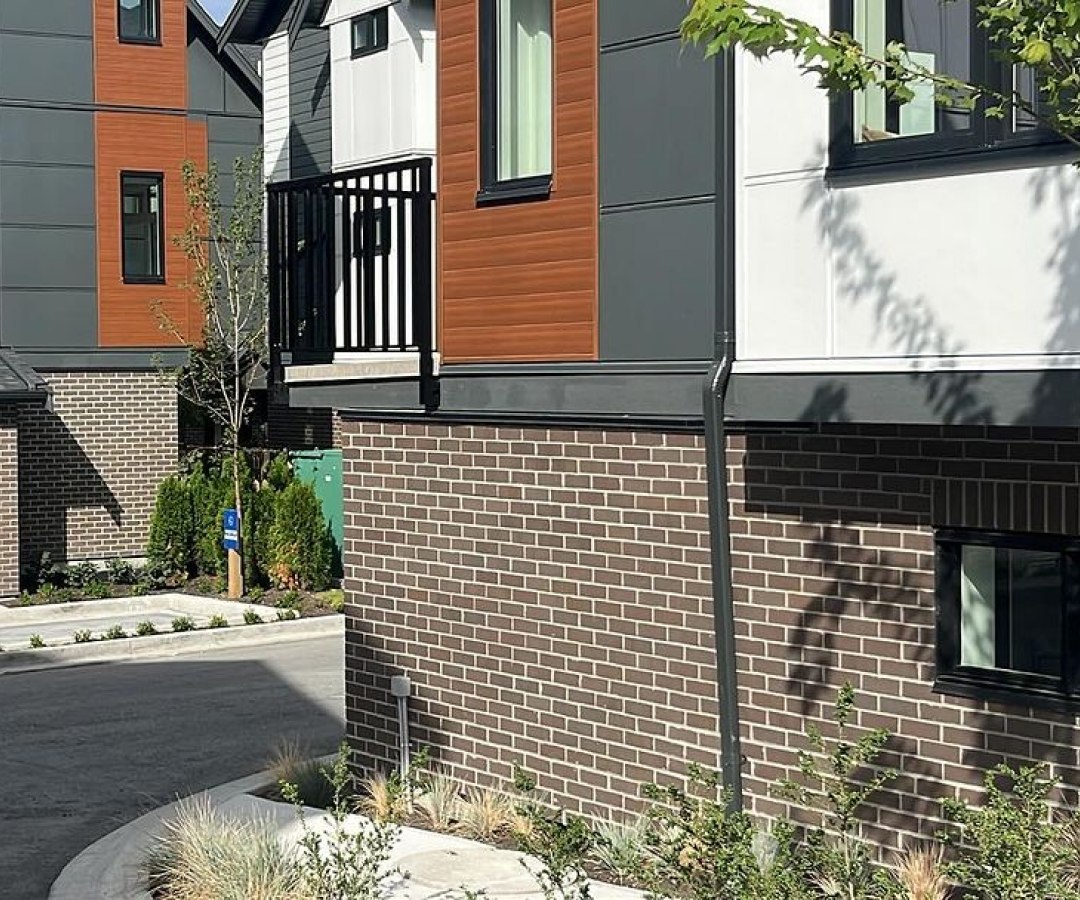
Sierra Slate | H.C. Muddox
Photo Credit: Shine Construction
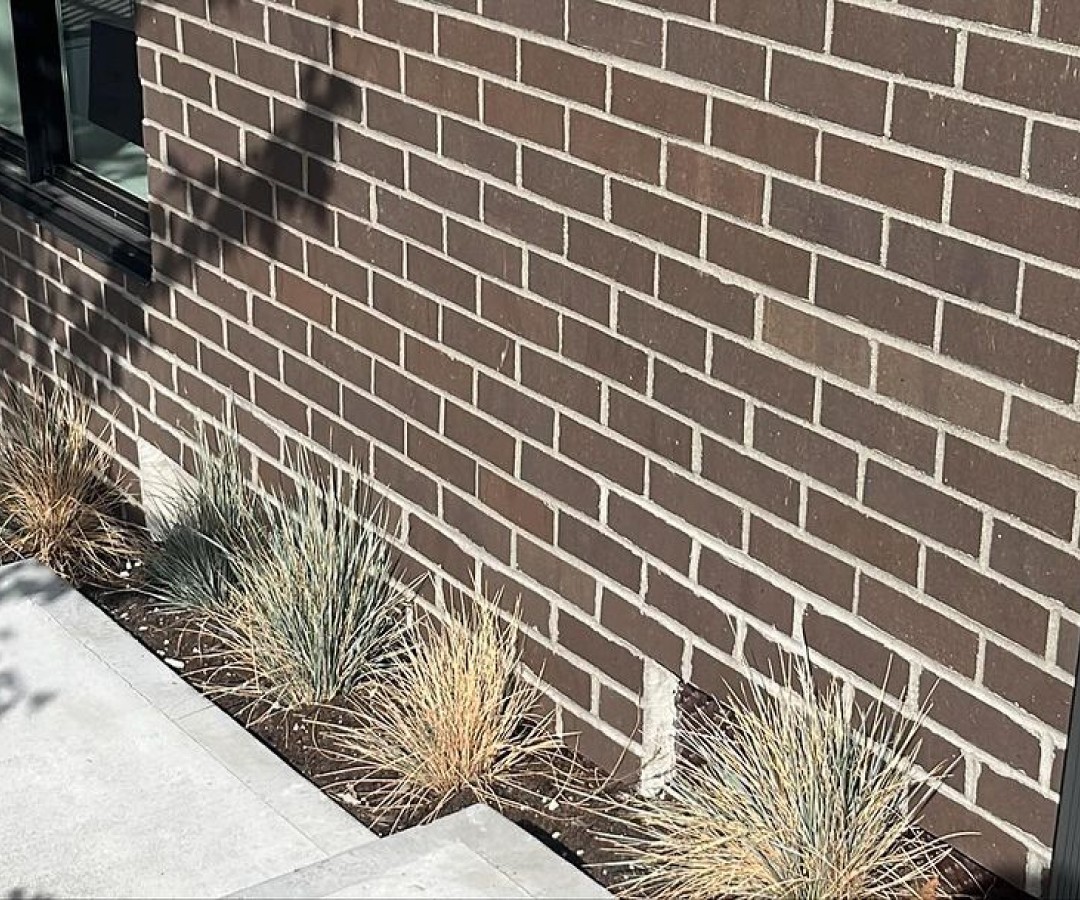
Mortar Must Accommodate Movement
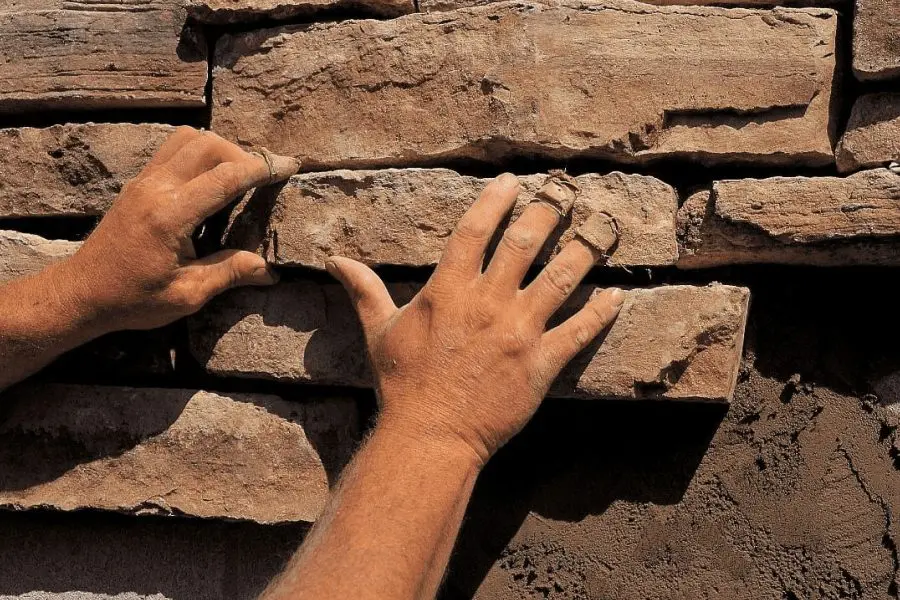
Brick expands and contracts over time as temperatures change and materials absorb and release moisture. Mortar needs to accommodate that movement.
When the mortar is too rigid, stress is transferred into the brick. Over time, this can lead to cracking around corners, window openings, and other areas where movement is concentrated.
A properly matched mortar allows the wall to absorb normal movement without placing unnecessary stress on the brick units.
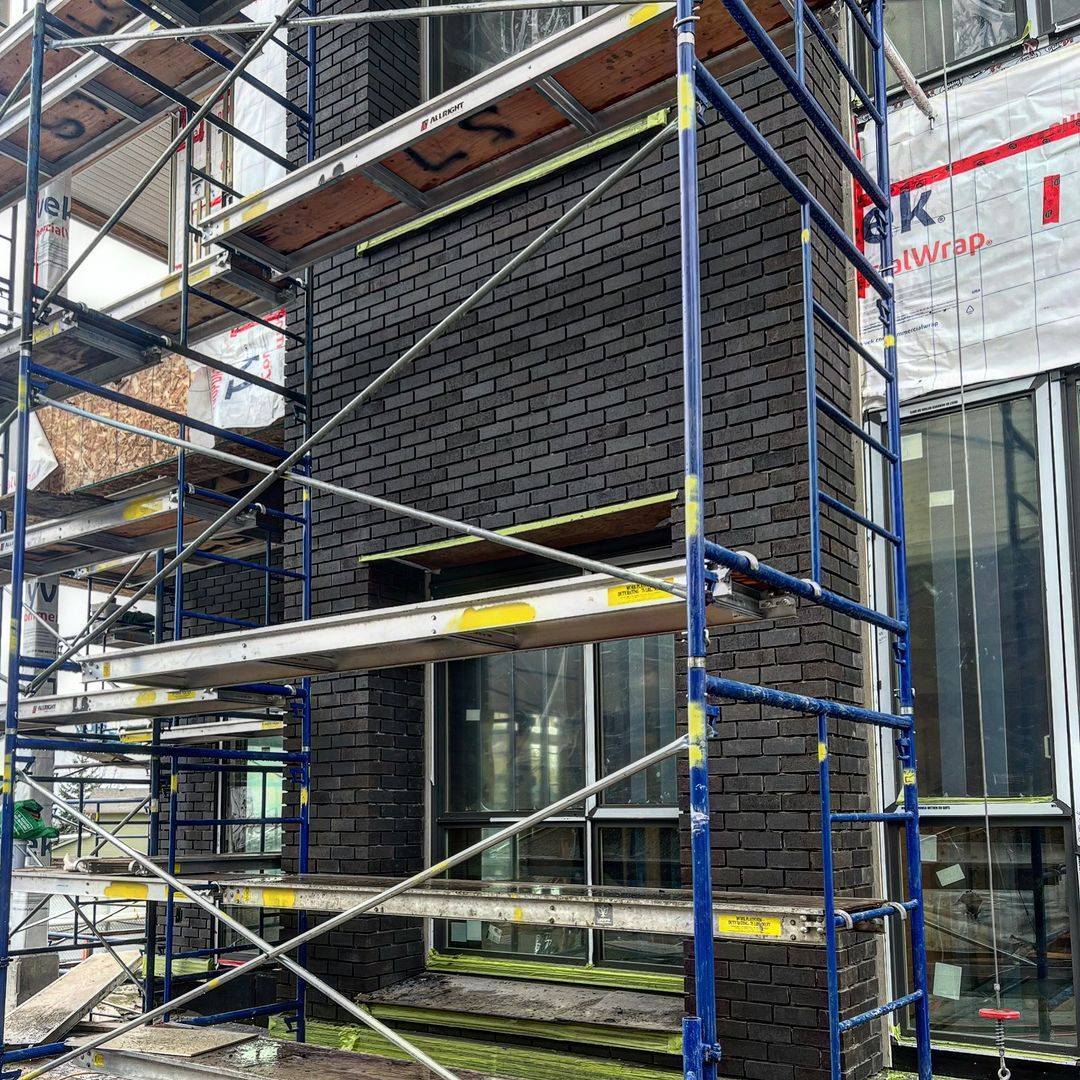
Ebony | H.C. Muddox
Photo Credit: Stander Enterprises
Why Mortar Decisions Matter Early
Mortar does more than hold brick in place.
Colour, joint profile, mixing consistency, permeability, and strength all influence how the wall looks when the scaffold comes down and how it performs through years of weather and movement.
Planning those decisions early helps reduce visual inconsistencies, moisture-related problems, and cracking over time.
I-XL can help coordinate those choices before installation begins.