
Terracina Blend | Casa di Sassi
When the weather turns during a stone installation, most of the attention goes to what is happening right then. The first thought is usually protecting the jobsite or determining whether work can continue.
But temperature and moisture can affect more than what happens during installation. They can influence mortar behaviour, moisture movement and how different materials within the wall assembly respond. Some effects can become apparent only after the wall is complete.
Understanding these relationships can help with planning before installation, protecting the ongoing work and identifying potential problems later.
Weather Changes How Mortar Behaves
Mortar needs sufficient water and suitable temperatures to cure properly.
In direct sun, high temperatures or low humidity, mortar can lose moisture rapidly. Excessive drying can interfere with cement hydration and reduce bond strength. Cold weather creates a different challenge. Lower temperatures slow how quickly mortar sets, hardens and gains strength.
Wet weather also requires attention. Heavy rain can wash out mortar that is only partially set, potentially reducing its strength or causing staining on the wall.
Other concerns can develop later. Full mortar coverage behind manufactured stone veneer is important for adhesion. Incomplete coverage can leave voids in the setting bed where water can collect. When temperatures repeatedly move above and below freezing, water trapped in these voids can freeze and thaw. This can put pressure on the back of the veneer and contribute to spalling or detachment from the wall.

Cremona Blend | Casa di Sassi
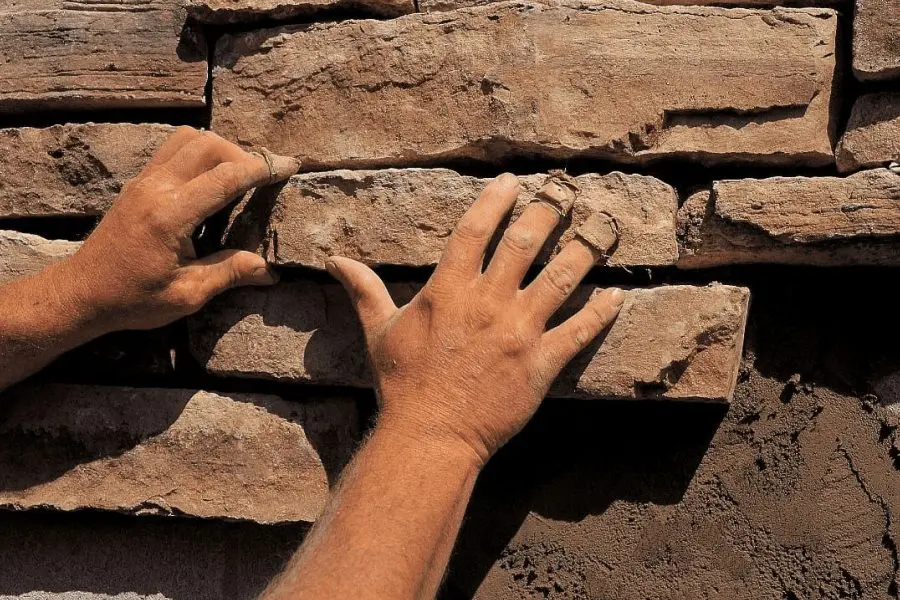
Photo Credit: ISHOT
Weather Affects What Appears on the Stone
Once the mortar has cured, weather can still influence what happens at the surface of the stone veneer.
One possible result is efflorescence.
Efflorescence happens when water picks up soluble salts within masonry materials and carries them toward the surface. The water eventually evaporates, but the salts are left behind.
That moisture can come from several places. Rain can enter through porous masonry materials, mortar joints, cracks, inadequate flashing or sealing, as well as during construction. The salts themselves may already be present in cement-based masonry materials, including mortar and grout.
Temperature can influence how noticeable efflorescence becomes. In warmer conditions, moisture generally evaporates more quickly. In colder conditions, slower evaporation can give dissolved salts more time to move toward the surface. This is one reason efflorescence is more common during winter.
Recurring efflorescence may indicate that moisture continues to enter or move through the wall. In those cases, the source of the moisture may need to be investigated rather than treating the deposits only as a surface issue.


Casa Blanca RoughCut | Eldorado Stone
Photo Credit: Tahsin Masonry
Weather Plays a Role in How Wall Materials Move
Stone veneer is part of a larger wall assembly, and the materials around it do not necessarily respond to changing conditions in the same way.
Changes in temperature and moisture can cause adjacent materials to move differently. Brick expands and contracts as temperatures change. The amount of movement depends on how much the temperature changes, the brick’s rate of thermal expansion and the length of the masonry section. Concrete masonry typically shrinks as it loses moisture, with temperature and wetting-and-drying cycles affecting that shrinkage.
These differences matter where materials meet. If differential movement is not properly accommodated, stresses can develop within the assembly. In manufactured stone veneer installations, differential movement can contribute to cracking, bulging or localized detachment of the veneer.
Movement therefore needs to be considered as part of the complete wall assembly. Joints, transitions and other movement details should follow the project specifications and manufacturer requirements.

Sagewood Slack Ledge| Dutch Quality Stone
Look at the Complete Wall Assembly Before Work Begins
Weather conditions need to be considered alongside the requirements of the veneer, mortar and complete wall assembly.
Before and during installation, consider:
- The mortar and the environmental conditions required for installation and curing.
- Joints, cracks, flashing and sealing details that affect how water enters or leaves the assembly.
- Transitions between adjacent materials where differential movement may need to be accommodated.
Weather does not affect every material or installation in the same way. Requirements vary by product and wall assembly, so always follow the manufacturer’s installation and applicable project specifications.
If you have questions about manufactured stone veneer or what to consider before installation, contact I-XL for product information and project-specific guidance.
Sources
- Brick Industry Association, Technical Note 18: Volume Changes – Analysis and Effects of Movement
- Concrete Masonry & Hardscapes Association, All-Weather Concrete Masonry Construction
- Concrete Masonry & Hardscapes Association, Control and Removal of Efflorescence
- International Institute of Building Enclosure Consultants, Manufactured Stone Veneer: Common Pitfalls in Design and Installation