



Project Name: FIRST UNITED’s Redevelopment
Location: Vancouver, British Columbia
Product: Aspen White by Glen-Gery, Black Ice by Interstate Brick, Champagne by Hebron Brick, Charcoal Klaycoat by Glen-Gery and Ruby Red by Endicott.
Architect: NSDA Architects and Arcadis Architects
Masonry Contractor: Maltesen Masonry
Photo Credit: Martha Burton, Redevelopment Project Lead, FIRST UNITED
Since 1885, FIRST UNITED has provided programs and services to people in Vancouver’s Downtown Eastside. Over time, growing demand exceeded what the existing facility could support, while increasing maintenance needs placed added pressure on its resources. Those pressures led to the redevelopment of its site at 320 East Hastings Street.
Designed by NSDA Architects, with Arcadis Architects serving as project architect, the new building gives FIRST UNITED more space for its community programs and services. Developed in partnership with Lu’ma Native Housing Society, it also combines community services with below-market housing for Indigenous residents.
Reconciliation is central to the redevelopment, reflected in its Indigenous housing, partnerships, artwork and cultural elements throughout the building.
More Space for Housing and Services
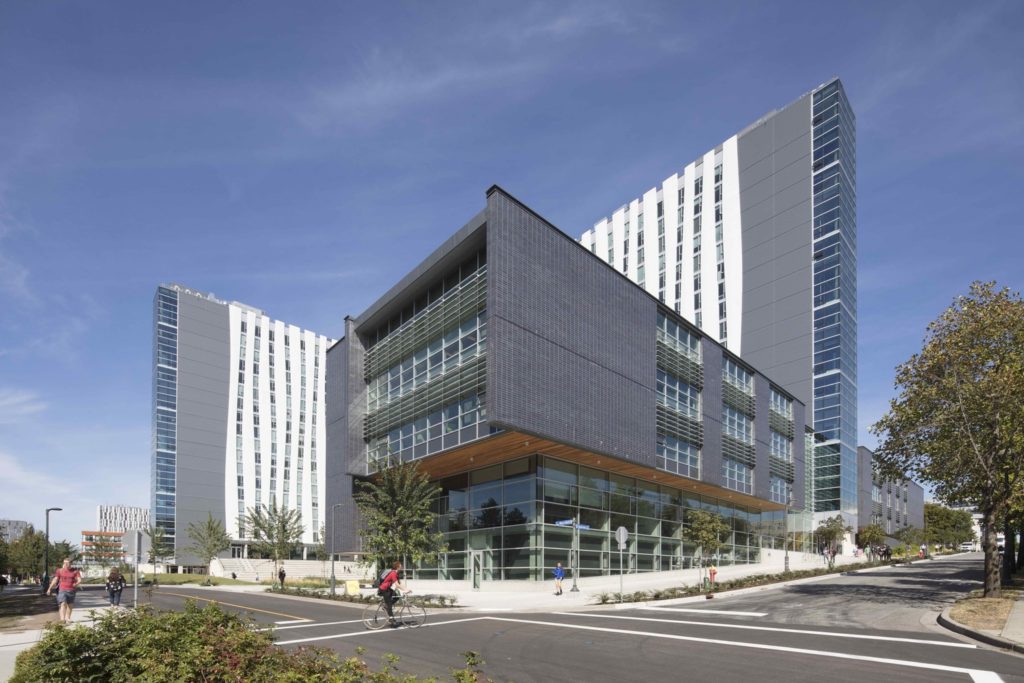
The new 11-storey building combines housing and community services. The first four floors give FIRST UNITED three times more space for programs and services, including meals, showers, legal advocacy, spiritual care and drop-in spaces.
The seven floors above provide below-market social housing for Indigenous residents. Lu’ma Native Housing Society brings decades of experience providing culturally safe housing for Indigenous communities and helped shape the residential floors to better support cultural and community needs.
Indigenous Art Woven into the Brickwork
Brick takes on a more expressive role at the new facility. A Salish weaving pattern designed by Musqueam Master Weaver and Designer Debra Sparrow, ΘƏLIΧʷƏLʷƏT, is translated into brickwork across the building’s facade. Glen-Gery’s Aspen White forms the base, with Endicott’s Ruby Red, Glen-Gery’s Charcoal Klaycoat and Hebron Brick’s Champagne arranged in an interlocking pattern. The contrasting red, black and gold tones give the geometric forms definition against the white masonry.

Photo Credit: Martha Burton, Redevelopment Project Lead, FIRST UNITED
Coast Salish blankets have traditionally served as robes of protection, ceremony and identity. Sparrow’s pattern carries that symbolism into the architecture, extending a sense of warmth and welcome across the shared spaces.
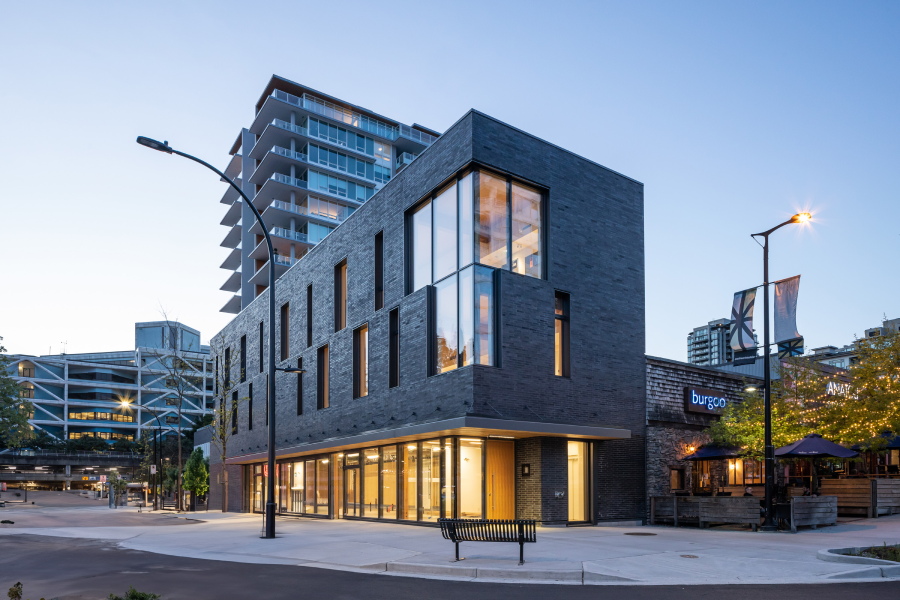
On the Hastings Street façade, Interstate Brick’s Black Ice provides a restrained backdrop for commissioned artwork by Mack Paul, kʷəlasəltən, allowing its colour and detail to stand out.

Photo Credit: Martha Burton, Redevelopment Project Lead, FIRST UNITED
Brick as a Way to Give
Brick also became a way for the community to support FIRST UNITED’s redevelopment. Through its Buy a Brick campaign, donors could purchase a symbolic brick in support of the redevelopment and Indigenous art program.
The Buy a Brick initiative formed part of FIRST UNITED’s broader capital campaign, which has since reached its fundraising goal.
A Place for Community
FIRST UNITED’s redevelopment brings community services, Indigenous housing and cultural expression together in one building. Brick connects several parts of that story, from Debra Sparrow’s woven pattern and the dark façade framing Mack Paul’s artwork to the community participation behind the Buy a Brick campaign. Together, those roles make brick part of both the building’s architecture and the broader story of the community it serves.